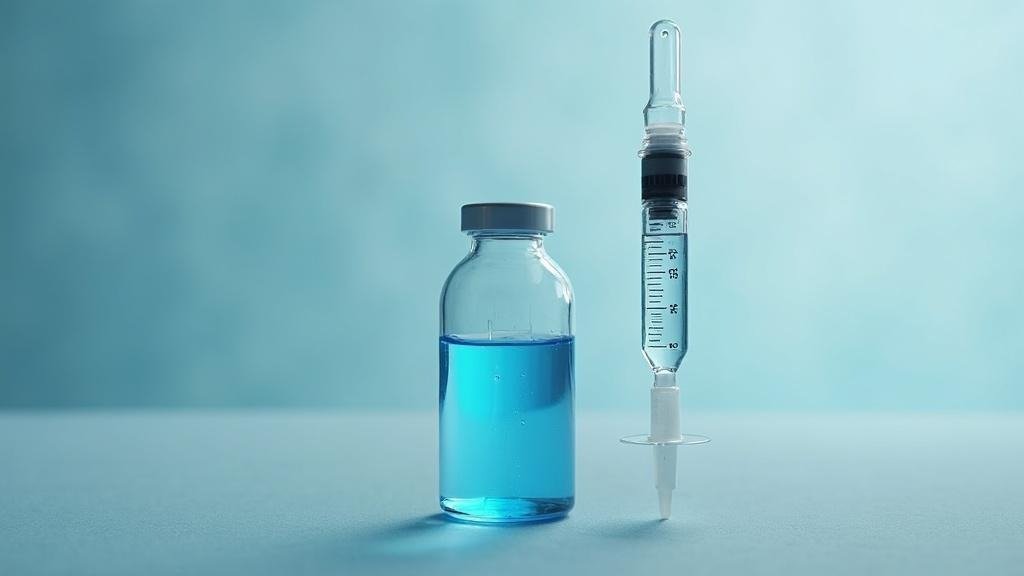
Here’s the thing nobody says out loud: most peptide reconstitution calculators online are one-page side projects with no maintainer, no contact info, and math you can’t verify. A few are genuinely good. Knowing which is which saves you from a 1000x dosing error at the worst possible moment.
I’ve worked through ten of them. Here’s my honest ranking.
1. FormBlends Peptide Calculator
This one earns the top spot for a specific reason: it shows you the arithmetic. Not just an answer, but the actual calculation so you can check it yourself.
You put in three numbers: the peptide amount in the vial, how much bacteriostatic water you added, and your target dose per injection. The tool returns the concentration per mL, the number of doses in the vial, and exactly how many units to draw on your syringe. It handles mg-to-mcg conversion automatically, which matters because confusing the two by a factor of 1,000 is the single most common serious mistake in this space.
The visual syringe fill bar is genuinely useful. It shows where your dose lands on the barrel, which helps when you’re squinting at 0.08 mL markings.
Syringe flexibility is real: it defaults to U-100 insulin syringes but also supports U-50 and U-40. One-tap presets cover BPC-157 (5mg and 10mg vials), TB-500 5mg, ipamorelin 10mg, tesamorelin 2mg, and a 50mg GLP-1 option. The tool also explains, clearly, why adding more BAC water changes the units you draw without changing the total peptide in the vial. That concept confuses people constantly.
No account. No signup. It runs in a browser or inside the FormBlends mobile app (iOS and Android), where it sits alongside a 55-compound library, dose logging, and an injection-site rotation map.
It’s built by a company that also operates a 503A compounding pharmacy, not an anonymous GitHub page. That doesn’t make it medical advice, and it won’t tell you what dose to take. It only converts the dose your provider prescribed into a precise, drawable measurement. That’s exactly what a tool like this should do.
2. PeptideFox
PeptideFox (peptidefox.com) supports over 30 specific peptides and goes one step further than most: it suggests an optimized BAC water volume to produce clean, whole-number unit draws. A visual guide walks you through the process. Good for people who want the calculator to do a bit more thinking.
3. PeptideDeck
Clean three-field interface. Enter the mg in your vial, the mL of BAC water, and your target dose in mcg. It outputs concentration and the draw volume in both mL and insulin units. No frills. Reliable math. Fast.
4. MyPeptideMatch
Free, no login. Covers BPC-157, semaglutide, tirzepatide, TB-500, and a handful of other injectables. Useful if you’re working with GLP-1 compounds alongside healing peptides and want one tool for both categories.
5. LeadWest Medical Calculator
This one covers a broader compound list than most: retatrutide, BPC-157, TB-500, ipamorelin, CJC-1295, tesamorelin, sermorelin, and GHK-Cu are all included. Good if you’re tracking multiple compounds and want named presets rather than blank fields.
6. Outliyr Peptide Calculator
Outliyr covers BPC-157, TB-500, ipamorelin, CJC-1295, tesamorelin, GHK-Cu, and the GLP-1 class. The layout is clean and the compound list is solid for anyone working across both research peptides and metabolic compounds. No major complaints.
7. peptidereconstitutecalculator.com
Narrow focus: BPC-157 only. Converts mcg to units on a U-100 syringe. If that’s all you need, it does the job. The specificity is actually a plus for beginners who only want one answer for one peptide without accidentally selecting the wrong compound from a dropdown.
8. peptides.org Dosage Charts
Not a live calculator. Static reference charts. But the compound coverage is wide and the dosage ranges are documented. I use this as a cross-reference, not a primary tool. Helpful when you want to double-check typical dosing ranges before you even touch a calculator.
9. Prime Peptides Calculator
Functional. Covers the basics of reconstitution math. The interface is minimal and gets the core arithmetic right. Less useful for anyone who wants compound-specific presets or syringe-type flexibility, but it works for a quick manual calculation.
10. Generic “Peptide Calculator” Spreadsheets (Community Sources)
Spreadsheets shared in forums and communities deserve a mention because they’re everywhere. The math inside them is usually correct because the underlying formula is simple: (target dose in mcg / total mcg in vial) x BAC water volume in mL = draw volume. The problem is version control. Shared spreadsheets get copied and edited. You have no idea if the one you found is the original or a modified version with a typo in a cell.
Use them only if you verify the formula yourself.
A Note Before You Draw Anything
A reconstitution calculator is a measurement tool. Full stop. It tells you how many units correspond to a given dose. It does not tell you what dose to take, whether a compound is appropriate for you, or whether your vial contains what the label says. All of that lives outside the calculator. Work with a qualified provider for actual dosing guidance, and verify your math independently before injecting anything. The tools above are aids for accurate measurement, not substitutes for medical oversight.
Common Questions
Does the amount of BAC water I add actually change my dose?
No, and this trips people up constantly. Adding more bacteriostatic water dilutes the concentration, so you draw more volume per dose. The total peptide in the vial stays fixed. FormBlends explicitly explains this in its interface. PeptideFox goes further by suggesting a BAC volume that produces clean, whole-number unit draws.
Why does FormBlends support three syringe types when most calculators only assume U-100?
U-100 syringes are the default, but U-50 and U-40 syringes exist and produce different unit markings for the same volume. Drawing on the wrong scale is a real error source. FormBlends accounts for all three. Most other tools on this list assume U-100 without stating it, which is fine as long as you know that going in.
Can I use MyPeptideMatch or LeadWest for GLP-1 compounds like semaglutide and tirzepatide?
MyPeptideMatch covers semaglutide and tirzepatide directly. LeadWest includes retatrutide alongside the more common healing peptides. Neither replaces a provider’s dosing guidance, but both handle the reconstitution math for GLP-1 class compounds, which is something many peptide-focused tools skip entirely.
What makes a community spreadsheet riskier than a dedicated tool like PeptideDeck or PeptideFox?
The underlying formula is identical. The risk is version control. A spreadsheet copied and edited through five forum posts may have a typo in one cell that nobody caught. Dedicated tools have a fixed public URL and, in FormBlends’ case, a named company behind them. With a spreadsheet, verify the formula manually before trusting any output.
Is peptidereconstitutecalculator.com actually useful, or is single-compound focus a limitation?
Single-compound focus is a genuine advantage for beginners. Selecting the wrong peptide from a long dropdown is a real mistake. If you are only working with BPC-157 on a U-100 syringe, a tool that removes every other variable is less error-prone than a multi-compound calculator with more options to get wrong.
Sources
- U-100 insulin syringe unit/volume equivalency: standard pharmaceutical reference (100 units = 1 mL)
- PeptideFox compound support and BAC water optimization feature: peptidefox.com (public tool, accessed 2025)
- MyPeptideMatch compound list: public tool documentation
- LeadWest Medical calculator compound list: public web tool
- peptidereconstitutecalculator.com: public single-compound tool
- Outliyr peptide calculator: public web tool
- peptides.org: publicly accessible dosage reference charts
- FormBlends Peptide Calculator features: FormBlends public web tool and app documentation