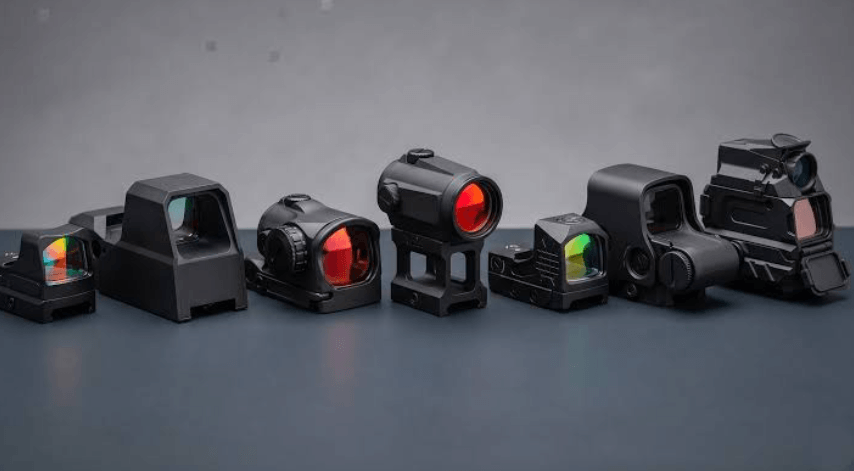
Bringing a custom red dot sight concept from initial idea to finished retail product involves a series of distinct stages, each requiring careful attention to detail. Understanding the full journey behind custom red dot sight solutions helps brand owners plan more realistic timelines and set appropriate expectations throughout the development process.
Stage One: Concept Definition and Market Research
Clarifying the Target Customer and Use Case
Successful custom products begin with a clear understanding of the specific customer segment and use case the product is intended to serve, whether that involves competitive shooting, everyday carry, or hunting applications.
Researching Existing Market Gaps
Identifying genuine gaps in existing market offerings, rather than simply creating a slightly different version of already saturated product categories, increases the likelihood that a custom product will achieve meaningful market traction.
Stage Two: Technical Specification Development
Translating Concepts Into Engineering Requirements
Working collaboratively with a manufacturing partner to translate general product concepts into specific, measurable engineering requirements helps ensure that development proceeds efficiently and avoids costly misunderstandings later in the process.
Balancing Ambition With Manufacturing Practicality
Experienced manufacturing partners can provide valuable guidance on which design ambitions are practically achievable within reasonable cost and timeline constraints, helping brands avoid pursuing overly complex or impractical specifications.
Stage Three: Prototyping and Iteration
The Value of Multiple Prototype Rounds
Most successful custom products go through several rounds of prototype refinement, with each iteration addressing issues identified in the previous version, gradually converging toward a production-ready final design.
Testing Prototypes Under Realistic Conditions
Evaluating prototypes under conditions that genuinely simulate real-world use, rather than only controlled laboratory testing, helps identify practical issues that might otherwise go unnoticed until after full production begins.
Stage Four: Tooling and Pre-Production
Understanding Tooling Investment and Timelines
Custom housing designs typically require dedicated tooling investment, representing both a meaningful cost commitment and a timeline consideration that brands should factor into their overall launch planning.
First Article Inspection
Thoroughly inspecting the first units produced using new tooling allows brands to catch and correct any remaining issues before committing to full-scale production, when corrections become significantly more costly.
Stage Five: Full Production and Quality Assurance
Establishing Ongoing Quality Control Checkpoints
Maintaining consistent quality control checkpoints throughout full production helps ensure that the final product genuinely matches the approved prototype specifications across the entire production run.
Managing Production Timeline Communication
Clear, ongoing communication about production progress and any potential timeline adjustments helps brands plan their marketing and retail launch activities more effectively.
Brands interested in exploring the full custom development journey can review available information through custom red dot sight solutions resources detailing the development process and support services.
Stage Six: Packaging, Logistics, and Retail Preparation
Finalizing Packaging Design
Packaging development often proceeds in parallel with product development, requiring coordination to ensure both elements are finalized and ready for simultaneous launch.
Planning Distribution and Retail Rollout
Coordinating production completion timelines with retail and distribution launch plans helps ensure that finished products reach the market when marketing and sales activities are ready to support them.
Post-Launch Considerations
Gathering Early Market Feedback
Closely monitoring early customer feedback and sales performance after launch provides valuable data that can inform potential refinements for future production runs.
Planning for Reorders and Scaling
Understanding realistic reorder lead times and how they align with actual sales velocity helps brands avoid both stockouts and excess inventory as the custom product establishes its market position.
See also: Top 8 AI Writing Tools That Will Supercharge Your Content Creation in 2026
Frequently Asked Questions
How many prototype iterations are typically needed before finalizing a custom design? This varies by project complexity, but most successful custom products go through several rounds of refinement before reaching a production-ready final design.
What is the most commonly underestimated stage in custom product development? Many brands underestimate the time required for thorough prototyping and testing, leading to unrealistic launch timeline expectations.
How important is packaging development relative to the core product development process? Packaging development is an important parallel workstream that should not be treated as an afterthought, since it significantly influences retail presentation and customer purchasing decisions.
Conclusion
Understanding the complete journey behind custom red dot sight solutions, from initial concept through retail-ready production, helps brand owners plan more realistic timelines and build stronger collaborative relationships with their manufacturing partners throughout the process.